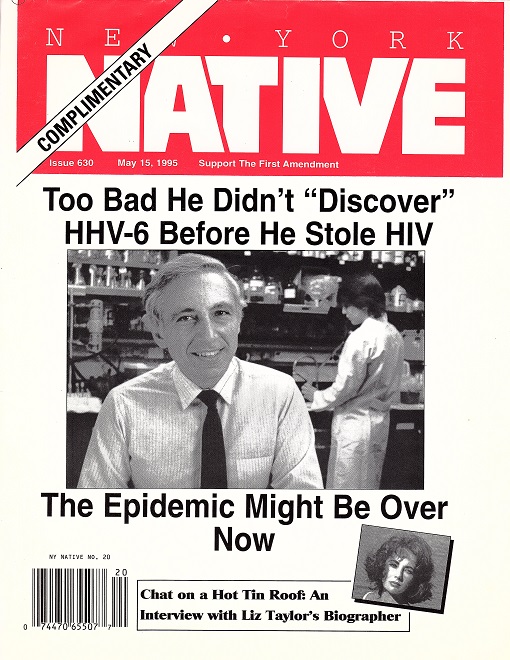
Perplexity A.I makes the case that in science and medicine we have moved on from the Age of Causation to the Age of Kitchensinkism versus Sine Qua Nonism.
Perplexity A.I makes the case that in science and medicine we have moved on from the Age of Causation to the Age of Kitchensinkism versus Sine Qua Nonism.
Medicine and public health have drifted from a tight focus on clear causal mechanisms toward a muddier landscape where almost everything is treated as relevant and almost nothing as truly indispensable. This can be framed as a shift from an Age of Causation to an Age of “kitchensinkism” versus “sine qua nonism” in how disease is explained and acted upon.ajph.aphapublications+3
Age of Causation
Classical infectious disease theory aimed to identify specific necessary or near‑necessary causes: Koch’s postulates, monocausal pathogen models, and later sufficient‑cause frameworks all sought to isolate elements without which a given disease could not occur. Epidemiologic models like Rothman’s “causal pies” still assumed that some components could function as necessary elements in every sufficient mechanism for an outcome, preserving the idea of sine qua non conditions even in multicausal settings.academic.oup+4
Rise of kitchensinkism
Contemporary research and risk modeling increasingly embrace “kitchen sink” approaches that throw vast arrays of variables, biomarkers, and covariates into models with minimal theoretical discipline, on the assumption that more data automatically produces better inference or prediction. This everything‑in ethos shows up in complex risk scores, AI‑driven prediction tools, and high‑dimensional epidemiologic adjustments that maximize association‑hunting but often blur which factors actually matter mechanistically or policy‑wise.pmc.ncbi.nlm.nih+4
Sine qua nonism as counter‑movement
At the same time, a counter‑movement in causal inference and philosophy of medicine argues that, even in multicausal systems, science must still search for conditions that are necessary in practice or conceptually—Rothman‑style necessary components, INUS conditions, or tightly specified mechanisms without which particular disease instances do not occur. This “sine qua nonism” insists on distinguishing genuine causal prerequisites from mere correlates or small contributors, emphasizing mechanistic coherence, necessary‑condition structure, and targeted removal of key components rather than treating every association as equally actionable.philsci-archive.pitt+5
From mechanisms to mixtures
The resulting tension defines the current age: medicine vacillates between data‑rich kitchensinkism, where causal stories dissolve into sprawling multivariable models, and sine qua nonism, which tries to recover a disciplined search for indispensable factors and mechanisms within those multicausal webs. Framing today’s debates this way clarifies why disputes over necessary causes, component causes, and over‑adjusted models are not just technical quarrels, but a struggle over whether medicine remains in the business of finding true sine qua non conditions or settles for predictive mixtures with no clear causal backbone.sciencedirect+4
- https://ajph.aphapublications.org/doi/10.2105/AJPH.2004.059204
- https://academic.oup.com/aje/article/185/11/1041/3849422
- https://www.ump.edu.pl/files/8_483_causation_in_epidemiological_studies.pdf
- https://www.jmaj.jp/detail.php?id=10.31662%2Fjmaj.2024-0246
- https://academic.oup.com/book/61541/chapter/536855762
- https://www.rtihs.org/sites/default/files/26902%20Rothman%201998%20The%20encyclopedia%20of%20biostatistics.pdf
- https://pmc.ncbi.nlm.nih.gov/articles/PMC10980258/
- https://www.sciencedirect.com/science/article/pii/S2590113320300043
- https://pmc.ncbi.nlm.nih.gov/articles/PMC11225100/
- https://www.science.org/doi/10.1126/sciadv.adi8411
- https://arxiv.org/html/2110.12235v3
- https://philsci-archive.pitt.edu/8351/1/epcause-medicine.pdf
- http://www.jreiss.org/papers/CausalityinMedicine.pdf
- https://pmc.ncbi.nlm.nih.gov/articles/PMC4079266/
- https://www.kosinmedj.org/journal/view.php?number=132
- https://saude.ufpr.br/medintegrada/wp-content/uploads/sites/40/2021/01/Medical-Error.pdf
- https://www.ipassinstitute.com/hubfs/medical-errors-leading-cause-of-death.pdf
- https://plato.stanford.edu/entries/necessary-sufficient/
- https://pmc.ncbi.nlm.nih.gov/articles/PMC1513293/
- https://blogs.kent.ac.uk/jonw/files/2015/03/interpreting_causality2007.pdf